
Braking Resistors: How They Work, When You Need Them, and Why Australian Industry Relies on Them
In modern electrical and industrial systems, braking resistors play a quiet but critical role. From slowing massive conveyor drives at mine sites to protecting variable speed drives (VSDs) in manufacturing plants, braking resistors keep equipment safe, efficient, and under control.
If you’ve ever wondered what braking resistors actually do, how to select the right one, or why Australian-made solutions are often preferred for harsh local conditions, this guide is for you.
What Are Braking Resistors?
Braking resistors are electrical components designed to dissipate excess energy generated when an electric motor slows down or stops. When a motor driven by a VSD decelerates, it temporarily acts like a generator, feeding energy back into the drive’s DC bus. If that energy is not safely removed, it can cause overvoltage trips or even damage the drive.
A braking resistor absorbs this regenerative energy and converts it into heat, allowing the motor to decelerate smoothly and safely.
For a clear technical overview of braking resistors and their operating principle, resources like provide a useful foundation.
How Braking Resistors Work in VFD and VSD Systems
The Basic Process
When a motor decelerates under load:
- Mechanical energy flows back into the drive
- The DC bus voltage rises
- A brake chopper activates
- Excess energy is diverted to the braking resistor
- The energy is dissipated as heat
This process prevents the drive from tripping on overvoltage and ensures predictable stopping performance.
Why VSDs Need Braking Resistors
Braking resistors are especially important in applications with:
- Rapid deceleration
- High inertia loads
- Overhauling loads (where gravity or load momentum drives the motor)
Without a braking resistor, VSDs may rely on long coast-down times or suffer nuisance faults.
Common Australian Applications for Braking Resistors
Australian industry places unique demands on electrical equipment. High ambient temperatures, dust, vibration, and remote locations mean braking resistors must be robust and carefully engineered.
Mining and Resources
Mining is one of the largest users of braking resistors in Australia. Typical applications include:
- Conveyor systems
- Stackers and reclaimers
- Mine hoists
- Ship loaders at ports
Australian manufacturers such as Backer Cynebar Ohmic design dynamic braking resistors specifically for mining, with cyclone-rated stainless steel enclosures and high IP ratings to suit local site requirements.
Ports, Rail, and Heavy Transport
In ports and rail infrastructure, braking resistors are used to control large mechanical systems where uncontrolled braking could cause:
- Structural stress
- Unsafe stopping distances
- Excessive wear on mechanical brakes
Rail and heavy transport applications often demand high-duty-cycle dynamic braking solutions able to withstand repetitive energy dissipation.
Manufacturing and Industrial Automation
In factories across Australia, braking resistors are commonly used with:
- Cranes and hoists
- Packaging lines
- Machine tools
- Elevators
These systems benefit from shorter stop times and improved positional accuracy, which directly boosts productivity and safety.
Types of Braking Resistors
Wirewound and Ceramic Braking Resistors
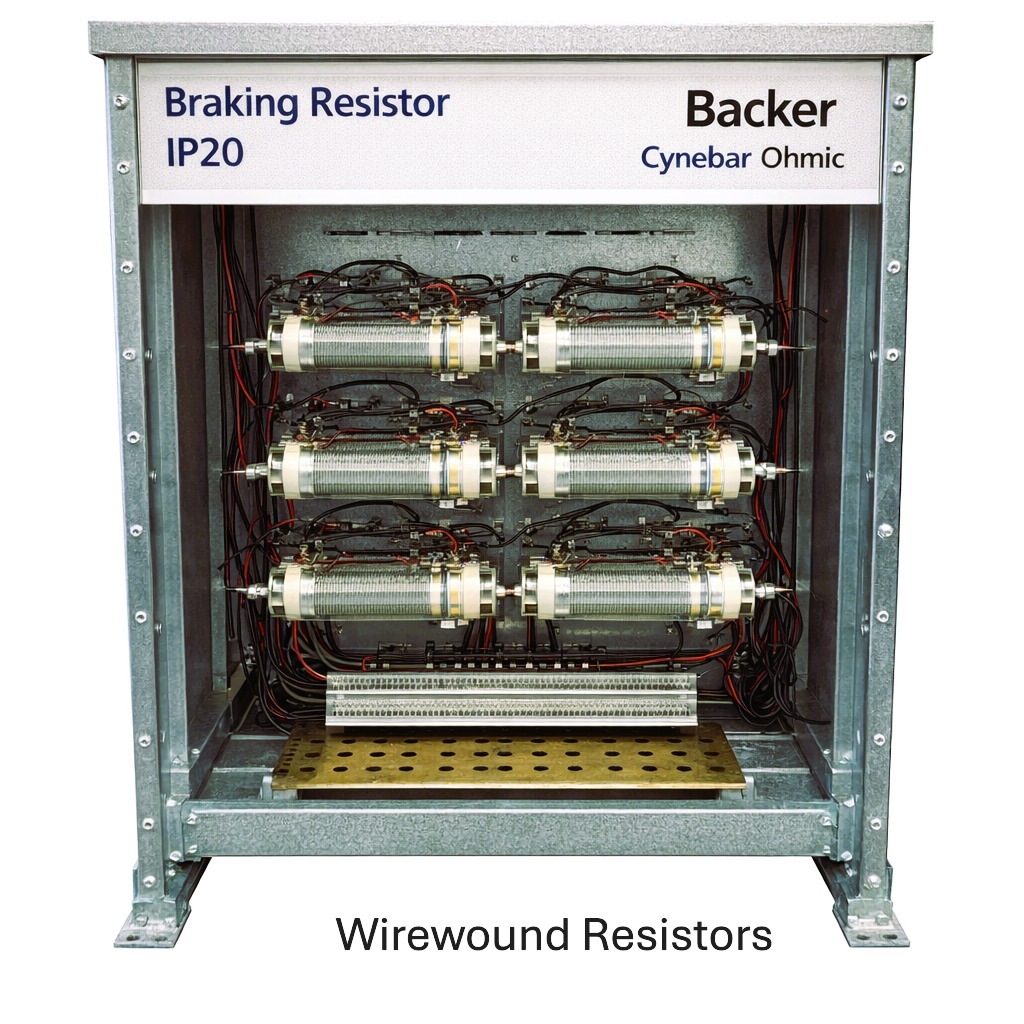
These are commonly used for low to medium power applications and are popular in industrial automation. Australian suppliers like Ohmic Resistors, based in Brisbane, manufacture wirewound and custom braking resistors locally, offering fast lead times and tailored solutions.
Grid and Edge-Wound Braking Resistors
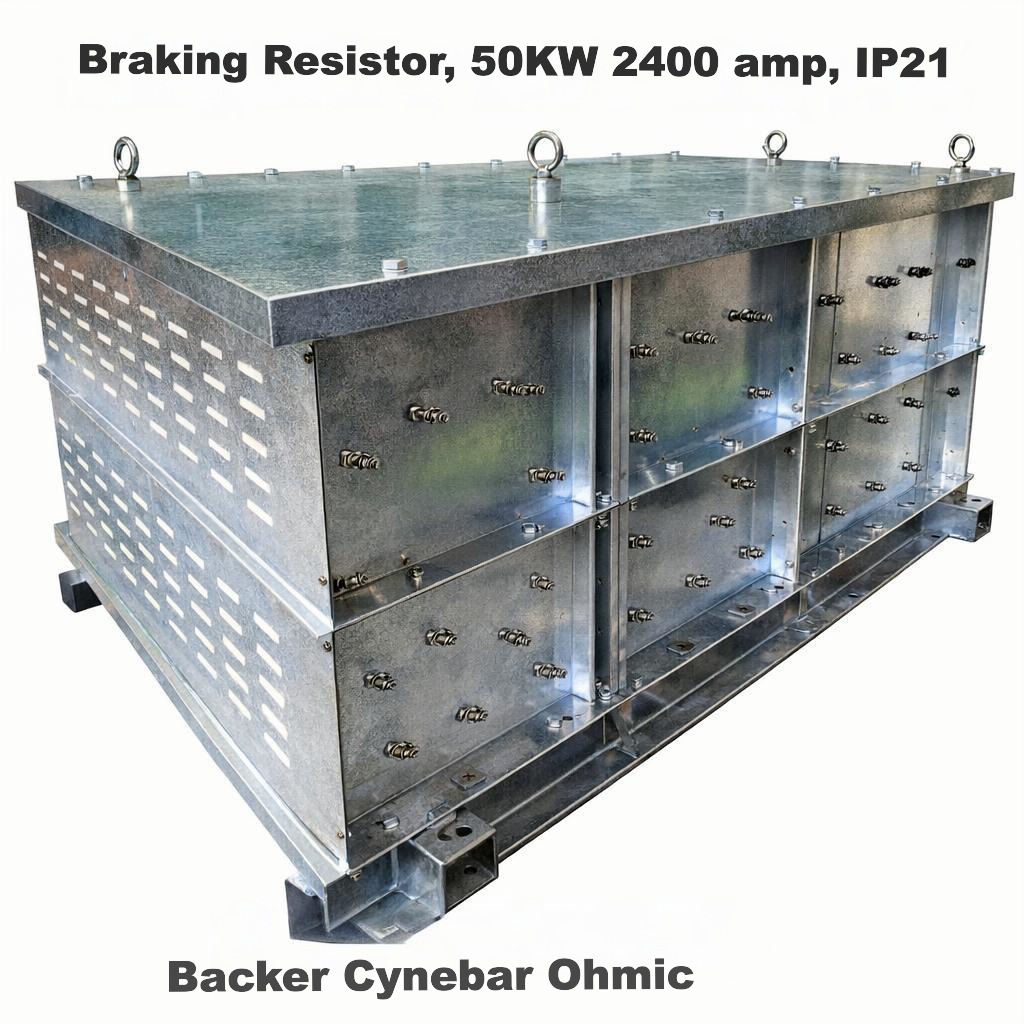
Used in higher power applications, grid-style braking resistors provide excellent heat dissipation. They are often selected for mining, ports, and rail projects.
Enclosed and Custom-Built Units
For outdoor or harsh environments, enclosed braking resistor assemblies with integrated:
- Thermal protection
- IP-rated enclosures
- Stainless steel construction
How to Choose the Right Braking Resistor
Selecting the right braking resistor is not just about resistance value. Key factors include:
1. Resistance (Ohms)
The resistance must fall within the VSD manufacturer’s specified range to avoid:
- Overcurrent damage (too low)
- Insufficient braking (too high)
Drive manuals typically define acceptable values.
2. Power and Duty Cycle
You need to consider:
- Peak braking power
- Average braking power
- Duty cycle (on/off time)
Short, frequent stops require a resistor with sufficient thermal capacity.
3. Environmental Conditions
In Australia, this matters more than many people realise. High ambient temperatures and dust can significantly reduce resistor life if not accounted for. Local manufacturers design specifically for these conditions, rather than adapting overseas designs.
4. Compliance and Standards
Braking resistors used in Australian projects often need to comply with:
- AS/NZS electrical standards
- Site-specific mining or infrastructure specifications
Australian-made solutions simplify compliance and documentation.
Why Choose Australian Braking Resistor Manufacturers?
There’s a strong case for sourcing braking resistors locally:
- Designed for Australian conditions – heat, dust, vibration
- Shorter lead times and local technical support
- Custom engineering rather than one-size-fits-all imports
- Proven performance in Australian mining, ports, and infrastructure projects
Braking Resistors vs Regenerative Drives
In some applications, fully regenerative drives can return energy to the supply instead of dissipating it. However, braking resistors remain popular because they are:
- Simpler
- More cost-effective
- Easier to retrofit
- Less sensitive to network conditions
For many industrial users, braking resistors strike the right balance between performance, reliability, and cost.
Final Thoughts: Getting Braking Resistors Right
Braking resistors might not be the most visible component in your system, but they are one of the most important. The right selection improves safety, protects expensive drives, and ensures smooth, predictable operation.
If you’re working with VSDs in mining, manufacturing, ports, or infrastructure, engaging with an experienced braking resistor manufacturer can save time, reduce risk, and extend equipment life.
Ready to Take the Next Step?
If you’re sizing a new braking resistor or upgrading an existing system, consult with a local specialist who understands Australian standards and site conditions. Speak with a reputable Australian manufacturer or engineer to review your application and ensure you’re getting a solution built to perform—today and for years to come.